Saturday, December 18, 2010

Lost in Translation: How Inconsistency Can Strengthen Your Brand

Cross posted from The Buzz Bin

globe

If you’ve ever worked on a branding project, you know that one of the keys to brand success is maintaining consistency across all communication channels. Your logo should appear in the same color, shape, format and font everywhere it is used, and all your communication materials – from your letterhead and annual report to your Facebook and Twitter pages – should employ the imagery, typography, key messages and tone of voice you’ve developed for your brand.

Most established brands (McDonald’s, Delta Airlines and Skype, for example) have a set of brand guidelines that document all these rules and help the individuals charged with representing the brand maintain its integrity.

Why the focus on consistency? Because, with enough repetition, your brand’s identity will begin to embed itself in the minds of consumers. However, if you frequently change the look and feel of your brand, those powerful visual and psychological cues will be lost, and your ability to forge an emotional connection with consumers will suffer.

Now, I am a person who likes to play by the rules, but, even for me, this issue of brand consistency begs the unavoidable question: If you want your brand to speak to consumers across a variety of cultures, do the same rules of consistency still apply?

Not exactly. According to Nigel Hollis, executive vice president and chief global analyst at Millward Brown Inc., the combination of product design, positioning and communication strategy that makes a brand successful in one country may have to be adjusted to build a connection with consumers in new markets.

And it’s not just a matter of converting your tagline from English to French or from Spanish to Chinese. As a French major, I learned that effectively translating something from one language to another is never as simple as consulting the dictionary. Accurate translation requires a solid understanding of both languages and both cultures involved. Without this deeper understanding, you’re likely to 1) end up with something like the descriptions on this “Chinglish” menu, and 2) lose the respect of your target audience faster than you can say “Bonjour,” “Nihau” or “Shalom.”

Brands are successful when they win consumers’ hearts as well as their minds, and in order to win someone’s heart, you must approach him or her in a way that is both comfortable and relevant.

Not surprisingly, Coke seems to have made as much headway as any global company in “translating” its brand across a variety of cultures. The company has done much more than just translating the text on its website from English to French, Japanese, German, etc.– it has built a separate website for each country that expresses the Coca Cola brand in terms relative to each unique culture. (Check out Coke Japan, Coke Sweden and Coke Russia for a few examples.)

If you compare the Coca Cola USA home page to the Coca Cola France home page, you’ll see that the two not only look different, they also act different.

The French version takes a more energetic, colorful approach while the American version evokes calm and simplicity. The former also features slightly different product messaging (Coca Cola light in place of Diet Coke) and highlights different brand engagement elements, such as co-promotions with Xbox 360 and mobile telecom provider Orange.

By partnering with a brand that has already staked a claim in the hearts of Frenchies–Orange – Coke is giving itself a leg up in becoming more approachable and meaningful to its target audience in France. The brand has taken a similar approach to reach Hispanic consumers in the U.S. Reinaldo Padua, assistant vice president of Hispanic marketing for Coca Cola North America, told Marketing News they have been able to increase sales among Hispanic immigrants by bundling beverages with popular food products like tortillas.

If you think about it, all brands – even local ones – live at the intersection of two different cultures: one of those buying the brand and that of the group responsible for its marketing. We marketers would do ourselves a favor by approaching brand strategy as an exercise in cross-cultural communication. Those of us who cultivate an understanding of our target audience’s needs, values and cultural norms will be better prepared to facilitate a connection between brand and consumer, and to prevent our brand promise from getting lost in translation.

Sunday, September 12, 2010

Happy Cows


I spent the better part of July and August with my nose to the grind, focused completely on work during the week and frequently on the weekends. I finally hit my wall the week before Labor Day and virtually collapsed with exhaustion by the time the long weekend rolled around.

But I now have indulged in two work-free weekends ... and I feel great. Rejuvenated, rested and restored to my normal, level-headed self. It's amazing what a little fresh air and a few nights of good sleep can do.

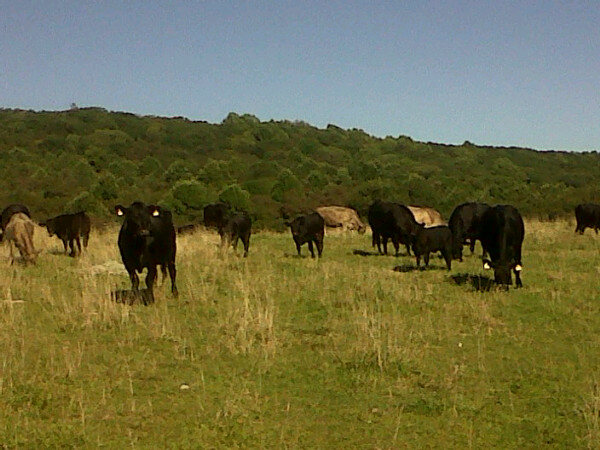
While I was NOT working over Labor Day weekend, I had the chance to stop and notice the world around me -- and my gaze settled on a bunch of happy cows.

Every summer, a herd of cattle comes to graze on the rich, mountain grass on my family's property in the Blue Ridge. I've never really thought about it until now, but they must be in bovine heaven. Fields upon fields of greenery untouched by man-made chemicals (well, unless you count the thistle patches my grandfather proudly sprays with weed killer once every few weeks), and nothing to do but eat, sleep and breathe.

Every year, there are a few cows that give birth on the mountain ... and then a few curious-looking, wobbly-kneed calves. We've watched them learn to nurse, admired their little black faces peeking out from underneath their mothers' udders covered in thick, white milk.

And then there are the feisty older calves, who entertain us with their head-butting and adult posturing. They're not that different from a bunch of teenagers, all trying to be the most mature kid on the block.

We've always wondered where the Buck's Elbow Mountain cows go at the end of their annual summer respite. Are they dairy cows? Beef cows? Or, God forbid, dog-food cows?

Last weekend we got our answer. "Them cows is beef cows," their owner told us in his barely decipherable Shenandoah Valley accent. "We got dairy cows too, but they're down in the barn at Grottoes."

As much as I hate to think of those precious baby calves heading to the slaughterhouse one day, I have to think that, at least when they do, they go with a belly full of green grass and a life full of happy memories. And I bet they make for a tasty burger too :)


Sunday, August 1, 2010

Multicultural marketing ain't what it used to be

Cross-posted from The Buzz Bin

How would you describe the typical American?

It is becoming harder and harder to do – and this has implications for marketers.

According to research from communications firm GlobalHue, the mixture in the American melting pot is becoming gradually richer and more complex. As cultural lines continue to blur, marketers will find that understanding consumers requires more than a single cultural lens.

Case in point: A recent Bendixen & Amandi poll shows that young Hispanics define being American in their own terms. For many, that means proudly speaking “Spanglish” and straddling two cultures – honoring their Hispanic roots while defending American values and pursuing the American dream.

Trends like these are proof that the old rules of multicultural marketing no longer apply. Today’s marketers need to understand the new cultural landscape and communicate to their target audiences in a way that acknowledges cross-cultural similarities over differences.

So how can marketers acquire a taste for what’s cooking in the new melting pot? Here are a few suggestions:

1) Expand your familiarity with other cultures

  • When you travel, go out on a limb and try a homestay with a foreign family. Or, if that’s not your cup of tea, take advantage of local tour guides to ask questions about cultural attitudes and norms.
  • Volunteer as a conversation partner for someone new to the U.S. Most universities have language partner programs, and organizations like theInternational Rescue Committee can pair you with a family or individual acclimating to a new way of life in the states. You’ll be amazed at what you learn as you work to communicate and find common interests with people from varying cultures and ethnicities.
  • Look to your peers for insight. If you have friends from backgrounds different from your own, talk to them about the similarities and differences they perceive among cultural groups.
  • At the very least, make a point to explore other cultures through books, movies and news media. New America Now is a great place to start. Check out its Ethnoblog and poll series.

2) Leverage social networks for research and experimentation

  • Peruse blogs, Twitter hashtags and Facebook groups targeting specific cultural audiences. Below are just a few examples:
    • Sandip Roy – a blogger and radio show host who frequently covers issues pertaining to Indian-Americans
    • #LATISM – the Twitter hashtag for Latinos in Social Media
    • Cuentame – a Facebook group geared toward Latinos
    • CitySaheli – an online community for the “savvy South Asian woman”
    • The Grio –a video-centric news community covering perspectives that affect the African-American community
  • Social media channels are well-suited for today’s multicultural marketers because they make it easier to adjust or revise strategies and appropriately micro-target within diverse communities.

3) Embrace culture in your campaigns

  • State Farm took this approach with its BollyStar Competition celebrating India’s Bollywood culture, and Pepsi has had great success with itsYoSumo campaign aimed at second- and third-generation youth and young-adult Latinos. See Jessica Faye Carter’s recent post on Mashable for more examples.

4) Make an effort to connect emotionally with your target audience

  • The NBA is doing this with Énebéa, a website geared toward Hispanic and Latino fans that have a strong emotional connection with Latino NBA players. The site has a special focus on Latino players and included more interviews, online chats, statistics and photo galleries than the general NBA site.
  • If your company is committed and/or involved with the community it’s trying to reach, be sure to highlight related activities so your audience knows you’re genuinely invested in it. Wells Fargo is an example of a company that does this well. See Bill Imada’s recent Ad Age article on the topic.

5) Always test assumptions in focus groups before incorporating them into your marketing campaign. You won’t know if your messages strike a valid chord with consumers – regardless of their cultural identity – unless you solicit honest, objective feedback.

Studying, observing and interacting with a culture outside your own will enable you to identify and leverage similarities and differences among various consumer segments. And being culturally aware won’t just help you develop a better multicultural marketing campaign, it will also enhance your ability to engage with (and have fun with!) people across the globe.

So grab a spoon and start sipping while the soup is still hot.

Photo courtesy: chewonthat blog

Saturday, July 31, 2010

Tidbits from Tuscany - More Musings on Olives

After discovering that not all olive oil tastes good, I decided to do some research on the olives of Tuscany. Here's what I learned:
  • Olive trees are evergreen (who would've thunk?). It usually takes about four years before they begin to bear fruit, but the trees can live for hundreds of years. They are incredibly resilient, sprouting back easily even if chopped to the ground, and fire-resistant.
  • In most Mediterranean areas, olives are harvested in November, December and January, but in Tuscany the harvest can start as early as late September. This early harvest means that Tuscan olives are generally less ripe and therefore produce less oil than others. So Tuscan olive oil is also rarer than its olive oil peers.
  • In Tuscany, olives are always picked by hand and the entire family is usually called on to pitch in during the harvest. (Sounds fun, doesn't it?) Olives are picked while they are still green and must be rushed to the press as soon as they come off the tree so they don't spoil.
  • In their natural state, olives are very bitter, so they are soaked in brine before beingeaten or packaged for consumers. The potent little fruits are about 20 percent oil, so it takes about 200 of them to produce a liter of olive oil.


  • In Tuscany, olives are pressed at a communal mill called a Frantoio. Growers traditionally bring their olives to the mill and stay to observe the official pressing. Granite wheels are used to crush the olives whole -- skin, pits and all -- making a paste which is further filtered and processed to extract all liquid from the fruit. This involves running the liquid through woven mats placed in a hydraulic press. A centrifuge separates the watery olive mass from the oil, and the oil is then stored in large jugs or steel tanks to "age" for a least a month. It then undergoes one more filtration process before it isfinally sold to consumers.
Check out the following sites for more fun facts, travel tips and recipe ideas related to the Tuscan olive harvest:

Food Network - Michael Chiarello

Photo courtesies: siciliasud.it, Wikimedia commons

Sunday, July 25, 2010

Tidbits from Tuscany - Insight No. 3


Another thing I learned in Italy: Not all olive oil tastes good.

Yep, you heard me right. In fact, I'll even go so far as to say some of it is downright nasty. And keep in mind that this is coming from an admitted olive oil addict. At home in the states, I buy the stuff by the liter and add it to just about everything I eat -- salads, hummus, pasta, seafood, sauteed veggies, pizza, chicken, dipping sauce for bread and so on. At my last physical, I learned that my LDL (or "good") cholesterol was off the charts high, and my doctor told me that probably had much to do with my extreme penchant for olive oil.

So, you can imagine my surprise when, at the Cantine de Greve (referenced in a previous post), I dunked a fresh piece of bread into a dish of Tuscany's finest, popped the dripping morsel into my mouth...and nearly spat it out on the tasting table. The flavor was awful -- like it had been aged in a corroding lead pipe.

"Must've gotten the dud," I thought, and moved on to the next oil spout. Thinking perhaps the bitter taste in my mouth had something to do with the bread I'd used for dipping, this time I ran my finger through the shiny, golden liquid and licked it in hopeful anticipation. But once again, what I experienced was a tongue-curling, pungent flavor.

After a third unsuccessful tasting, I finally gave up. Maybe my tastebuds were off that day or maybe my palate just isn't sophisticated enough to appreciate authentic Italian olive oil. But either way, it brings me to Tuscan Tidbit No. 3 - All olive oils aren't created equal

Photo Courtesy of rd.com

Thursday, July 15, 2010

Mantra of the month

To live content with small means; to seek elegance rather than luxury and refinement rather than fashion; to be worthy, not respectable, and wealthy, not rich; to listen to stars and birds, babes and sages with open heart; to study hard; to think quietly, act frankly, talk gently, await occasions, hurry never; in a word, to let the spiritual, unbidden and unconscious grow up through the common -- this is my symphony.

- William Henry Channing

Friday, July 9, 2010

Tidbits from Tuscany - Insight No. 2


No trip to Italy would be complete without a good dose of wine tasting. And since our home base for the week was a cottage in the heart of Chianti, we challenged ourselves to taste a wide variety of Chianti's best. And I must say we performed pretty well against our goal.

By the end of the week, we had tried everything from a (delicious) carafe of the house wine at our local ristorante, to Il Vino Nobile di Montepulciano and Barone Ricasoli's Chianti Classico.

On our last day, we even made a stop at Le Cantine di Greve, a be old wine cellar with cool stone walls, tile floors and a smorgasbord
of tasting options. We went hog wild hopping from one sample station to the next, sipping reds, whites and vin santo, then dipping tiny
cubes of bread in an array of olive oils.

Anyway, my point is that we consumed our fair share of Chianti during our time in Chianti. And I'm embarrassed to say I very nearly left the region without even knowing what it is that makes a Chianti Classico a Chianti Classico.

Fortunately, a charming Italian man saved me from my ignorance. GiuLinkseppe Mirossi -- better known as Beppe -- is a friendly and accommodating gentleman who runs a car service in Tuscany and was kind enough to drive Granville and me from Castellina to the Pisa airport for our Saturday departure. I can truthfully say I learned just as much from Beppe during our 70-minute commute that day than I had in the previous six combined. I'll try to share all that I learned from him in future posts, but for now, it's back to the topic of Chianti.

As many people know, Beppe said, in order to qualify as Chianti Classico, a wine must be made from at least 80 percent Sangiovese grapes. But what most do not know is that the Sangiovese grape vine is indigenous to Chianti and therefore thrives in the region's soil, which is riddled with stones. These stones, said Beppe, leach minerals that provide nourishment to the grape vines through their roots. Plus, because the stones are very porous, they absorb moisture during the winter months and release it back into the soil during the hot summer months, making for a surprisingly stable environment for the roots all year round.

So, Beppe told us, Sangiovese grapes planted and grown in California, for example, will produce a wine very different from that made with Sangiovese grapes grown in Chianti. And only the latter will ever be considered Chianti Classico. The secret, he said, is in the soil.


Monday, June 28, 2010

Tidbits from Tuscany - Insight No. 1

I just returned to the states after six days in Tuscany with my family. Now, a week in Tuscany may sound idyllic, but, in all honesty, our trip was less reminiscent of "Under the Tuscan Sun" than it was of "Dumb and Dumber."

For example, within two hours of our arrival in Italy, we had driven in circles for 30 minutes in search of the leaning tower of Pisa, barrelled down a one-way street headed the wrong direction, and virtually burned through the clutch of our rental Peugeot. When we finally screeched into a sliver of a parking place in the center of town, we rolled out of the car feeling like a cluster of baby birds newly ejected from the nest. We squinted in the sunlight, gave our ruffled feathers a good shake and wobbled off to see the Leaning Tower.


Well, apparently our brains were as muddled as a baby bird's too. Either that or we had somehow left our good sense behind in the states, because not one of us second guessed the fact that we were leaving a car full of luggage parked on the street in a city known for its high incidence of theft.

So of course when we returned to the Peugeot an hour later, we found the front passenger window shattered into a million tiny pieces. And, sure enough, virtually everything of value was gone: laptop, iPod, Kindle, Blackberry, sunglasses and cash. The lucky bandit might as well have graffitied Dumb American F--ks on the side of our car... because we sure felt like them.


Granville realizing that with his iPod and laptop, the Italian thief had made of with thousands of dollars worth of iTunes.

A slew of four-letter words and several phone calls later, we made our way to Pisa's Carabinieri, or police station, to report the crime. And I know you'll be shocked to learn that the officer on duty could not have cared less. After making us wait a while in the designated waiting room -- for no apparent reason, as we were the only ones there --he had us to fill out two identical copies of a claim form (I guess a Xerox machine would be far too indulgent for the Pisan police station) and sent us on our way.


Granville and Rob contemplating the Italian justice system at Pisa's Carabinieri

So we proceeded back to the rental car office and traded in our battered Peugeot for a trusty Volkswagon. "I guess that's why they require you to buy rental car insurance," said my dad in a moment of brilliant hindsight.

Fortunately, the trip was all up hill from there. But I don't think any of us will forgive ourselves for that initial display of stupidity any time soon.


Tuscan Tidbit No. 1 - Don't forget to pack your street smarts

Thursday, May 20, 2010

Finding Your Voice

I saw John Grisham at a wedding last weekend.

That probably doesn't sound that cool to you, but I have to admit I was a little starstruck.

And I discovered that, in addition to being remarkably handsome, Grisham also has a powerful presence. He does not seem overbearing or imperious ... but you can sense that he's there, observing the world with a keen eye and sharp mind.

Ironically enough, today a colleague brought to my attention Grisham's recent address to graduates of the University of North Carolina at Chapel Hill. I found inspiration in his words and am posting them here as a reminder to myself to always strive for clarity, authenticity and truth in my writing.

Enjoy...


John Grisham’s Commencement Address, “Find a Voice”
The University of North Carolina at Chapel Hill, May 9, 2010

A voice has three essential elements.

The first is clarity. When I was in high school, I discovered the novels of John Steinbeck. He was and is my favorite writer. The Grapes of Wrath is a book I’ve read more than all others. I admire his talent for telling a story, his compassion for the underdog, but what I really admire is his ability to write so clearly. His sentences are often rich in detail and complex, but they flow with a clarity that I still envy. His characters are flawed and tragic, often complicated, but you understand them because they have been so clearly presented.

In life, we tend to ignore those who talk in circles, saying much but saying nothing. We listen to and follow those whose words, and ideas and thoughts and intentions are clear.

The second element is authenticity. Few things I like better in life than getting lost in a good book written by an author who is in full command of his subject matter, either because he has lived the story, or so thoroughly researched it. I read a lot of books written by other lawyers – legal thrillers, as they are called – I read them because I enjoy them, also I have to keep an eye on the competition. I can usually tell by page 3 if the author has actually been in a fight in a courtroom, or whether he’s simply watched too much television.

In life, we tend to discredit those who claim to be what they are not. We respect those who know their subject matter. We long for, and respect credibility.

The third element is veracity. In the past few years, the publishing industry has been scandalized by a handful of writers who wrote very compelling stories of their real-life adventures. These were good stories, they were well written, the voices were clear and seemingly authentic. They sold for big money, they were marketed aggressively, they were reviewed favorably, and then they were exposed for being what they really were – frauds fabrications, lies. The real-life adventures never happened. The books were pulled from the shelves. The publishers were embarrassed. Lawsuits were filed to retrieve the advances. And the writers’ voices have been forever silenced.

In life, finding a voice is speaking and living the truth.


Monday, April 5, 2010

Things that give me pause

Committed - As Julia Roberts and Javier Bardem began filming the Hollywood version of Eat, Pray, Love in Bali, Elizabeth Gilbert was putting the final touches on an untraditional, but thoroughly satisfying follow-up to her 2006 bestseller. Committed is a historical, sociological and cultural exploration of marriage and its ever-evolving role in society. While I wouldn't necessarily recommend it to a giddy, wedding-obsessed bride-to-be, I'd say it's worth a read for anyone who has contemplated what marriage really means ... and how it affects the two individuals it involves.

Check out Ariel Levy's review of Committed in The New Yorker, and Curtis Sittenfeld's evaluation in The New York Times.


Brothers is one of those movies I know will stick with me for a while. I guess you could say this film succeeds on its ability to stir up a wide range of emotions. For me, it was a virtual Molotov cocktail of sadness, excitement, confusion and relief. Tobey Maguire's performance is haunting...riveting to the point of actually inducing cold sweats (granted, I happened to be watching the movie on one of the warmest nights we've had this year, but still....). And Jake Gyllenhal somehow manages to make you fall in love with his character, even though he happens to be a cigarette-smoking, unemployed ex-con. There's something about those soulful brown eyes that does it for me every time.

If you've seen it, I'd love to hear your impressions in the comment section below.

Sunday, February 21, 2010

Pet people

I have never thought of myself as a pet person. Sure, I grew up with cats and golden retrievers that I adored, but I never really took an interest in other people's pets. As I have gotten older, however, and especially over the past six months, I have become much more attuned to the world of pets.

There are several reasons for this, I think. First, since I grew up in a pet-owning household, I grew accustomed to finding dog hair in my food, having my feet attacked by cat claws in the middle of the night and waking up with warm, wet nose in my face. The absence of joys like these now makes me acutely aware of the lack of pets in my everyday life. And while I wouldn't necessarily want to change this, the fact that I don't have my own furball to attend to makes me more cognizant of the fact that other people do.
I also believe that losing a pet makes one realize just how significant a role a furry, four-legged friend can play in your life. The heartache I experienced saying goodbye to our family dog last February was surprising in its intensity. My chest literally ached. And even now, a full year later, I am occasionally swept over by waves of sadness as I remember her soulful brown eyes and soft, silky cheeks. This most recently occurred when I read Garth Stein's The Art of Racing in the Rain, a must-read for anyone who has ever loved a dog.


But my immersion in the pet world has reached an all-time high since last August, when I began working with a company that describes itself as (and truly is) a pack of pet lovers. In consulting with BISSELL on their numerous pet-related initiatives -- from their Most Valuable Pet Contest to their Pack of Pet Lovers online community and their partnerships with Petfinder and North Shore Animal League America -- I have discovered the remarkable network of pet people that extends across the U.S. and around the globe. (One of my newest Twitter friends is a fun-loving French canine, @ParisChien.)

This network -- which leaves little doubt in my mind that we are a society full of pet people --includes such pet influentials as Andrea Arden, Cesar Millan, Dr. Marty Becker, Wendy Diamond and Kristen Levine; authors of pet blogs like USA Today's Paw Print Post, Paw Luxury, Scratchings and Sniffings and The Dog Files; and the millions of Americans planning to attend such upcoming events as BlogPaws, Global Pet Expo, SuperZoo, NSALA's Adopt-a-thon and HSUSA's Walk for the Animals. It includes the 69 million American households that own pets, as well as those whose work revolves around the pet industry --the veterinarians, trainers, groomers, breeders, dog walkers, kennel managers, pet product manufacturers, shelter volunteers, animal psychics....and so on and so on.

So I guess the question is not so much whether or not I am a pet person, but rather what kind of pet person I am. How will my personal experiences with pets like Maisie, Pippin, Thistle and Squeak combine with my new acquaintance with the global pet network to define my ultimate pet personality?
I think the jury is still out on this one :)


Maisie

Saturday, February 13, 2010

Un roman à savourer


Although, as noted in a previous post, I found Muriel Barbery's "The Elegance of the Hedgehog," to be a fresh, insightful and thoroughly enjoyable read, the author's style is so quintessentially French that I couldn't help but wish I was reading it in her native language.

So, when I decided to pick up Barbery's other novel "Une Gourmandise," I went for the original, authentic, French version. And even though this means consulting my French dictionary at least once every five paragraphs, I have no regrets.

Barbery's writing is marvelous. Her use of language, metaphor and personification is nothing if not inspiring. The way she describes the cultivation, preparation and consumption of food evokes the vivid, primordial sensuality that lies at the root of our eating experiences.


For Barbery, a perfectly ripe tomato becomes a pleasantly plump "belle dame" squeezed into a crimson silk party dress and ready to burst at the touch of a tooth. A sushi chef's hands give birth to cubes of pink and red mother-of-pearl, which invite slow, supple mastication in order to savor their velvety-softness without altering their essential character.

If you take pleasure in food -- in finding, fixing and feasting on it -- then read "Une Gourmandise." You will relish every word.


Read more about Muriel Barbery and her work in this Time Magazine piece: http://www.time.com/time/magazine/article/0,9171,1836659,00.htmlme/magazine/article/0,9171,1836659,00.html


Friday, February 12, 2010

A note on journaling

I love this piece by Melissa Donovan, "A Messy, Liberating Guide to Journal Writing," and could not identify with it more. I have tried just about every one of her 25 recommended ways to journal ... and I'm not done yet :)

And...I must admit that I too am partial to the Moleskine journal. I don't know how they do it, but there is something about the way a ballpoint pen runs across a Moleskine page - smooth as silk - that just can't be beat.

Happy Journaling.....

Sunday, January 24, 2010

Basketball moms

Last weekend, I went to watch the 9th grade basketball team my boyfriend coaches play one of its arch rivals. I arrived at half time and slipped into the first empty seat I could find, trying my best not to disturb the parents and grandparents already perched in the stands.


After shuffling off my coat and glancing at the score, I began, as I always do, to take inventory of the individuals around me. To my left were three slender, young mothers, sporting three variations on the preppy mom uniform - blue jeans, wrap sweaters and clunky leather boots. They chatted amongst themselves, but kept their eyes fixed on the court. On my right, two enthusiastic fathers effervesced about the team playing better that night than they had all season. I heard the man behind me answer his cell phone only to be shushed by his wife. "Honey..." she hissed, "You're talking really loudly."

And then my eyes fell on the woman seated just in front of me whose curly, salt-and-pepper hair was drawn softly away from her face, revealing a placid expression and unfurrowed brow. Her lips rested in a half-smile that evoked a sense of calm not normally observed at a basketball game. I was intrigued.

I leaned a few inches forward and saw a mound of woven cotton cascading over her thigh into a cloth satchel. It was then that I noticed her hands, poised just above her lap, gently gripping a pair of plastic knitting needles.

She was knitting. At a basketball game.

Now, I am not saying there is anything wrong with bringing handwork to a sporting event....I'm just saying it was something I had not witnessed until that moment.

My first reaction was one of mild disgust. Could her son's basketball game really be that boring to her? How would he feel if he knew she was knitting during his game? Like he's not good enough... not interesting enough...not her top priority?

But as I thought it over more carefully, I decided that perhaps my first assessment had been unfair. In all honesty, she could have been paying full (or almost full) attention to her son's game even if her hands were otherwise occupied. And maybe he would rather her knit throughout his game than embarrass him by cheering or yelling at the ref.

Maybe the gentle, mindless activity helped this mother relax and enjoy something that left other parents overinvolved and tense.

Who knows....perhaps all those 9th grade boys would be better off if their parents paid a little bit less attention to every dribble, pass and foul shot they made. Maybe they'd be relieved to know their parents weren't always hyper-focused on them, and that they would even take the occasional opportunity to let their minds wander.

Sunday, January 17, 2010

Things that give me pause

Morandi - My new favorite spot in NYC's West Village. Tile floors, wood paneling, soft lighting and amazing ambiance. Not to mention the simple yet flavorful Italian food. The Picci al Limone is a pleasant surprise.


The Girl with the Dragon Tattoo - The title doesn't do this book justice. Stieg Larsson presents suspense and sadism in a vividly portrayed Swedish town.


It's Complicated - I'm still trying to decide what I liked best about this movie: the hysterical story line, drool-inducing kitchen scenes or to-die-for decor.


Paris to the Moon - Just as enjoyable and inspiring the second time around as it was the first time. Adam Gopnik's perspective on French (and expatriate) culture, while occasionally trop intellectuelle, is ever insightful and astute.

Sunday, September 20, 2009

A little perspective

"My experience is what I agree to attend to."

I heard this William James line quoted on NPR a few months ago and it has stuck with me ever since.

It has drawn my attention to the fact that, when it comes to my career, I often allow myself to attend to thoughts or feelings that cloud my ability to appreciate the present.


This is probably because I am a perfectionist. It is easy for me to become ensconced in inconsequential details and I have a hard time performing a task if I know I can't give it all of my energy and focus.


As I have adjusted to a new job over the last few months, I have occasionally found myself on the verge of panic at the thought of completing all the tasks on my to-do list to the best of my ability. At times it has felt that there just aren't enough hours in the day.

On June 17, I wrote in my journal, "Another very busy day. Feeling overwhelmed. I think I am spending more time on some of these tasks than I should, but I am paranoid about making a mistake. Can't seem to wind down in the evenings when I need to."

A week later, I wrote "My mind is racing tonight. No matter how many times I go over my to-do list in my head, it keeps going."

This entry is followed by a list of tasks that seemed insurmountable at the time. But as I read back through the list, I find myself smiling, chuckling at my own overdramatic self.

A to-do list that once seemed daunting now seems perfectly do-able ... and tasks that once stirred my anxieties have now become routine.

This realization -- that once-overwhelming assignments over time become matters of habit -- has caused me to think about those stressful days at work in a whole new light.

I am beginning to believe that if I never felt overwhelmed, stressed or intimidated by an assignment, it would probably mean that I was not learning -- or, at least that I wasn't learning at a stimulating pace.

It is good to remember that there will always be things that burden or worry us in life, so rather than dwelling on the difficulty at hand, we ought to focus on the personal growth that will eventually result.

We should always bear in mind that our experiences are what we agree to attend to.

(See Artsdevivre's "Growing Up" for another perspective on careers and personal growth.)

Saturday, August 29, 2009

Leap of Faith

We arrived at noon – nervous, but excited – in a state of disbelief about what we were about to do.

My legs felt stiff as I opened the car door and stepped out onto the gravel drive. I moved slowly toward the hangar, squinting my eyes in the summer haze and feeling anxiously bewildered by my surroundings.

The inside of the hangar was like a beehive – buzzing with activity. Dozens of people sprawled across the floor, twisting, tucking and folding large heaps of nylon into tight little parcels. Others darted back and forth across the large room, barking orders in their bare feet.

We made our way to the unmarked registration desk, which was manned by a slight but athletic-looking woman.

“You guys here for tandems?” she chirped.

We nodded timidly.

“Cool. I just started a video. Come on back.”

She grabbed a stack of papers and quickly weaved her way across the gear-strewn floor. We hopped along behind her, taking care not to step on any fingers, toes or important looking cords.

“Just fill out this paperwork,” she said, ushering us into a dusty classroom. “And bring it back up front when you’re finished.”

She was gone before I could even think about asking any questions.

I sat down gingerly, as I would in a strange doctor’s office, and looked around the room for some sort of reassurance.

No such luck.

The video, which was narrated by a man with dark skin and a long, woolen beard, was a tad too reminiscent of an Al Qaeda communiqué for my comfort, and the “paperwork” turned out to be a 20-page legal disclaimer stating (and restating) that what we were about to do was “inherently dangerous” and could result in serious injury or death.

I soon realized that all the other people in the classroom were scribbling their initials all over the same death contract I gripped in my sweaty little palm. They seemed to be ignoring the possibility that the skydiving experience could turn out to be anything but fun.

Reluctantly, I followed their lead, and signed my life away in a matter of minutes. I then scuttled as quickly as possible back to the registration desk and practically threw my wad of cash at the girl behind the counter. I knew that as soon as I forked over my $250, I would be mentally and physically committed.

We were eventually summoned to a brief training session led by a wry fellow who told us there were two things we absolutely had to do during our sky dive: keep an arch in our backs throughout the entire free fall, and tell our instructors immediately if we felt the urge to vomit.

Simple enough.

Then we waited, watching as one group after another suited up, boarded the plane and, minutes later, emerged from the clouds above us like a flock of Rainbow Brite-infused birds.

The first few landings I witnessed made me cringe. The solo divers came in hard and fast, as if sliding into home plate for a game-winning run. Some of them soared in with such uncontrolled momentum that I thought they might take out a building – or at least one of their buddies – on the way.

But watching the tandem jumpers land was much more comforting. They came in softly, smoothly and with the utmost control. And each time I saw a smiling face come bobbing back from the landing strip, the butterflies in my stomach fluttered a little less violently.

By the time it was finally our turn to gear up, I was so tired of waiting that I probably would have been willing to jump out of a plane with anyone who offered to take me. So when I met my instructor and discovered he was a Navy man, I felt as confident as I ever would about risking my life for a fleeting adrenaline rush.

“Now,” said my instructor once I had donned my diving harness. “Do you remember the most important thing you have to do during your jump?”

“Yes,” I said emphatically. “Arch my back.”

“Nope,” he shook his head. “Afraid that’s not it. Who told you that?”

My stomach did a flip flop.

“Um… I …I don’t remember his name, but…”

“The most important thing – in fact, the only thing you have to do once you exit that plane,” he said, “is to have fun.”

I smiled.
“I think I can do that,” I said.

Within a few minutes, we were packed like sardines in a tin can of an airplane, watching as the altimeters on our wrists measured 10,000 feet … 12,000 feet … and, finally, 13,500 feet.

As I pulled my goggles down over my eyes, I felt my instructor tug the harness to make sure we were securely fastened to one another.

Then the door at the rear of the plane slid open and four experienced jumpers shimmied out one by one, clinging to the side of the airplane like oversized tree frogs.

I blinked, and they were gone.

A blast of cold air swept across my face as we approached the back of the plane. I saw clouds and open air, and felt suddenly vulnerable.

From then on, I was aware of what was happening, but felt like I was experiencing it from a distance. My instructor’s voice faded to a dim murmur and everything became blurry through my goggles.

In an instant, I felt my body torque and plummet head-first into spiraling white space. Then there was nothing but the deafening roar of free fall.

I had expected a jolt, or at least a falling sensation, but the movement was surprisingly smooth. My body was hurtling toward the earth at several hundred miles per hour, but somehow I wasn’t scared. I didn’t even feel the need to scream.

I just kept my mouth shut and focused on breathing, which was no easy task.

Then, with the yank of a cord, I was plunged into a tranquil, floating silence. My body trembled and my ears rang, but my mind was calm.

I removed my goggles and admired the expanse of lush, green farmland below. As I drifted through the air, with my legs dangling in the breeze, I felt an overwhelming sense of peace.

It has since occurred to me that skydiving probably isn’t so different from any other risk you take in life. Whether you are getting married, starting a new job, having a child or jumping out of a plane, what may at first seem terrifying – especially when you consider all that could possibly go wrong – usually turns out to be instinctive, comfortable ... even fun.

Once you cross the initial hurdle of committing yourself to a challenge and accepting its inherent risks, you are three fourths of the way there. Then, all it takes is a few encouraging smiles and a firm but gentle nudge from someone you trust, and, before you know it, you are soaring through the open air, with the wind in your face and adrenaline coursing through your veins, and – surprisingly enough – you realize you are enjoying it.

Tuesday, August 11, 2009

Summer Reading

Over the last month, I have read two fantastic novels by female authors relatively new on the literature scene.

The first - "Belong To Me" - was Marisa de los Santos' follow up to her 2005 novel, "Love Walked In." De los Santos writes with clarity, honesty and emotion ... and the characters in her books are people I would like to have as friends.

The characters in Kathryn Stockett's first novel, "The Help," are equally interesting and engaging, but in a completely different way. These ladies living in Jackson, Miss. in the 1960s represent a wide spectrum of strengths and weaknesses, passions and dreams. I am inspired by their sense of compassion for each other.

The summer isn't over yet, and I am already 20 pages in to what I can tell will be another good one: "Bird by Bird" by Anne Lamott.

Tuesday, July 21, 2009

Summer


Is there any sound more soothing than the gentle drone of cicadas on a midsummer night?

Monday, July 20, 2009

Things that give me pause


On July 1, Christopher B. Howard became the first black president of Hampden-Sydney College. The 40-year old is a Rhodes scholar and graduate of the U.S. Air Force Academy with a doctorate in politics from Oxford University and an MBA from Harvard Business School. He earned a Bronze Star in Afghanistan, headed Bristol-Myers' HIV/AIDS initiative for Africa and now serves as a defense attaché to Liberia, where he spent two weeks on duty last month before reporting to his new post at Hampden-Sydney.

Howard is an Aspen Institute Henry Crown Fellow and serves as a senior advisor on African affairs at Stonebridge International. In 2000, inspired by his wife's experiences growing up under Apartheid in South Africa, Howard founded the Impact Young Lives Foundation to provide scholarships and travel opportunities to South African students of color.

His resume goes on and on ... and is nothing short of remarkable. I look forward to seeing the new perspective Howard and his family will bring to the Hampden-Sydney community.


July 19 Richmond Times-Dispatch article: http://bit.ly/30qtVt


Christopher Howard on leadership: http://www.youtube.com/watch?v=ZW7-eeg5NfA